
loader image

Plenary Speakers 2026

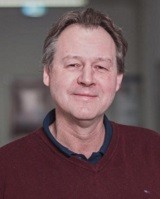
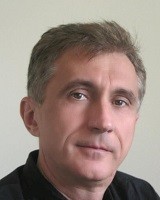
  • Prof. CHRISTIAN GHIAUS

    Center for Energy and Thermal Sciences, INSA Lyon, France

    Plenary Lecture:

    Reproducible Computational Science

CHRISTIAN GHIAUS is full professor at INSA Lyon, France. He has been working over 30 years on intelligent control of energy and air quality in the build environment with contribution to fuzzy, neural netwoks, and model predictive control. He developed a method for dynamic models for building energy management based on modelling heat transfer with thermal networks and their transformation in state-space representation. He also pioneered computational psychrometric techniques by defining the sizing of HVAC systems as a control problem. These methods are taught at master level in universities in France and Switzerland. In teaching, he uses extensively personalized tests (for which he developed a method in Python for generating cloze questions for MOODLE) and group projects. References: The imperative for reproducibility in building performance simulation research. Journal of Building Performance Simulation, 1-7 (2025); pELECTRE Tri: A computational framework and Python module for probabilistic ELECTRE Tri multiple-criteria decision-making. Software Impacts, 100781 (2025); Dynamic Models for Building Energy Management, https://cghiaus.github.io/dm4bem_book/intro.html (2025).

Abstract:  Computational science uses advanced numerical and data science methods. Reproducibility, the ability to obtain the same results by using the same data and methods, is essential in computational science research to ensure the reliability and validity of the results. The benefits of reproducible research include enhanced scientific integrity, faster scientific advancements, and valuable educational resources. Despite its importance, reproducibility is often overlooked due to technical complexities, insufficient documentation, and cultural barriers such as the lack of incentives for sharing code and data. This presentation encourages the reproducibility of articles on computational science and proposes to recognize reproductible code and data, with persistent Digital Object Identifier (DOI), as peer-reviewed archival publications. Practical workflows for achieving reproducibility are presented for the use of MATLAB and Python.
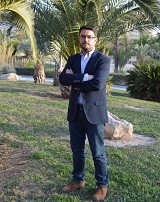
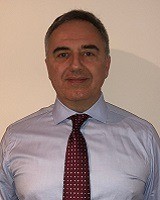
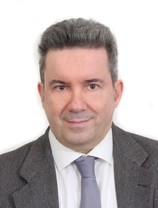
  • Prof. JOAQUÍN SILVESTRE-ALBERO

    University of Alicante, Spain

    Plenary Lecture:

    Gas Hydrates Confined in High-Surface Area Materials: A Nature-Inspired Approach for Gas Storage and Separation

JOAQUÍN SILVESTRE-ALBERO is full professor of Inorganic Chemistry at the University of Alicante. He leads the Nanopore Group by LMA devoted to the design of nanomaterials (activated carbons, metal-organic frameworks – MOFs, zeolites) with tailored porous structure and surface chemistry to be applied in a wide range of processes such as gas adsorption, gas separation, drug delivery, catalysis, among others. He is co-author of 205 papers in internationally recognized journals (h index 56) and several book chapters. Furthermore, he leads many national, international and industrial projects. He is the coordinator of the Horizon Europe project CLEANWATER “Multifunctional sustainable adsorbents for water treatment assisted with plasma technologies and for health protection from xenobiotics”, and partner of Horizon projects WAVEE “Waste as Valuable Elements for Europe”, and MOST-H2 “Novel metal-organic framework adsorbents for efficient storage of hydrogen”. He is also COI of the spin-off company OMIX CIRCULAR TECHNOLOGIES.

Abstract: Clathrate hydrate are crystalline solids formed in nature when water and gas molecules are in contact under favorable pressure and temperature conditions. Natural clathrates hydrates contain methane preferentially as a guest molecule, although carbon dioxide hydrates have also been identified in nature.[1] Overall, clathrate hydrates can be considered the main reservoir on Earth for gas storage. Despite their abundance in nature, their nucleation and growth are associated with very slow kinetics due to the limited gas-liquid interphase in bulk conditions. Nucleation and growth kinetics can be accelerated through the incorporation of nanoporous materials in the synthesis media. Taking advantage of the confinement effects in the inner cavities, nanoporous materials can act as nanoreactors promoting the formation of the initial nucleation centres, and their subsequent growth.[2] These confined hydrates exhibit a high storage capacity, fast formation kinetics, and a roughly complete water-to-hydrate conversion. Among the different nanoporous materials, activated carbon materials and metal-organic frameworks (MOFs) have shown a very promising performance acting as nanoreactors, provided that the porous structure and surface chemistry are properly designed (preferentially for methane).[3,4] Unfortunately, gas hydrate formation is restricted to molecules above 0.33-0.36 nm (e.g., CO2, CH4, etc.) due to the necessity to stabilize the 3D network through intra-crystalline non-bonding interactions. However, recent studies in the literature have shown that hydrogen molecules can also be encapsulated in clathrate cages, although at much higher pressures (ca. 2 kbar).[5] These hydrogen clathrates exhibit multiple cage occupation, thus giving rise to a stoichiometry of 64 H2·136 H2O, i.e. up to 5 wt.% hydrogen storage capacity. These severe formation conditions can be moderated through the incorporation of a properly designed carbon materials and MOFs (e.g., PCN-222). In the specific case of PCN-222, this material combines a proper porous structure (unidirectional mesoporous channels) and a proper surface chemistry (slightly hydrophobic in nature), needed to promote the nucleation and growth of these confined hydrogen clathrates. Under these conditions, the formation pressure has been decreased to 1.35 kbar, with very fast kinetics (within minutes), using pure water, and with a nearly 100% water-to-hydrate conversion. Contrary to carbon materials, pressures above 1.35 kbar become detrimental for the formation process in PCN-222, most probably due to the deterioration of the MOF structure at these high pressures. These studies constitute the first experimental evidence of hydrogen clathrate formation in carbon materials and MOFs at moderate pressure and temperature conditions, and opens the gate towards the design of novel porous materials with tailored structural properties to promote the nucleation and growth at milder pressure conditions.

  • Prof. VLADAN KONCAR

    ENSAIT – National Graduate School of Arts and Textile Industries, Roubaix, University of Lille, France

    Plenary Lecture:

    E-textiles – Applications and Perspectives

VLADAN KONCAR is a full professor at ENSAIT (National Graduate School of Arts and Textile Industries) in Roubaix, France, part of the University of Lille. He obtained his PhD in 1991 from the University of Lille 1 in Villeneuve d’Ascq, in the Lille metropolitan area. From November 2009 to November 2015, he served as Research Director at ENSAIT and Director of the GEMTEX research laboratory. Professor Koncar was President of AUTEX (Association of Universities for Textiles, www.autex.org) from June 2007 to June 2010. In January 2010, he received an Honorary Doctorate from the University of Iasi, Romania. Professor Koncar began working on smart and e-textiles more than twenty years ago and is recognized as one of the pioneers in this field. He has chaired twelve international scientific conferences and serves on the editorial boards of numerous scientific journals. Professor Koncar is the author of more than 300 scientific publications (indexed in the ISI Web of Science), including journal papers, book chapters, books, conference proceedings, and patents. His research interests include flexible textile sensors and actuators, smart clothing and e-textiles, as well as the modeling and control of complex systems. He teaches automation, information  systems, computer networks, virtual reality, and smart textiles. He has coordinated numerous national French research projects and has served as scientific coordinator of several European projects.

Abstract: E-textiles systems and devices have recently been developed for various application fields, including medical and healthcare, safety and security, and defense. Their reliability and testing, as well as their ability to meet sustainability and circularity requirements, must be carefully studied and evaluated. This presentation focuses on recent defense applications involving e-textiles, with particular emphasis on:

Parachute testing: Specifically, the assessment of performance and aging through the use of embedded textile strain gauges integrated into the parachute canopy.

Active textile structures for camouflage: Addressing both military and civil challenges. In the military sector, the development of adaptive optical systems for camouflage and stealth has become a major priority to protect soldiers and assets on the battlefield. Among the technologies under development, electrochromic materials are particularly relevant in the visible spectrum. The security, economic, and societal stakes in conflict situations are significant. These active textile structures are based on electrochromic yarns capable of controlled color change. However, significant challenges remain regarding micro-connections, reliability, and robustness.

Vital signs monitoring: The monitoring of soldiers’ physiological parameters on the battlefield, integrated into advanced soldier systems. This includes positioning, ballistic system monitoring, energy management, and human-machine interfaces.

These e-textile applications involve advanced textile structures designed to ensure high robustness and reliability, withstand harsh operational conditions, and comply with REACH regulations and sustainability principles. The standard for e-textile quality and reliability, necessary to facilitate their presence on the market, is also presented.

  • Prof. KARSTEN BERNS

    Robotics Research Lab, Department of Computer Science, University of Kaiserslautern, Germany

    Plenary Lecture:

    Control Concepts for Autonomous of Offroad Vehicles

KARSTEN BERNS studied computer science with a focus on artificial intelligence at the University of Kaiserslautern (1982-1988). He received his doctorate from the University of Karlsruhe in 1994 for his research on Neural networks for the control of a six-legged walking machine. As head of department at the Research Center for Computer Science, Karlsruhe (until 1994-2003), he investigated adaptive control concepts for various types of service robots. Since 2003 he has been a full professor at the RPTU Kaiserslautern-Landau.

Current research activities at the RPTU are the realization of reliable, complex, autonomous robot systems. He and his department are developing the Finroc robot middleware, the iB2C behavior-based control architecture and various verification methods. The main applications come from off-road robotics, in which autonomous or semi-autonomous vehicles such as small trucks, excavators, combine harvesters, tractors, rescue robots and other commercial vehicles have been realized. In the field of humanoid robots, the android systems ROBIN and EMAH are being investigated for human-robot interaction and new approaches to bipedal walking are being researched.

Abstract: In the commercial vehicle sector, there are an increasing number of applications in which vehicles are to be automated with manipulators in order to achieve efficiency gains. For example, mowing work is to be automated using a manipulator installed on a truck in such a way that no operator is required, while at the same time taking highly complex environmental situations into account. Controlling such off-road vehicles poses a major challenge. Due to highly complex but also very noisy sensor data, such as from lasers or cameras, the positions of objects in relation to the vehicle can only be recorded inaccurately. This sensor problem also affects localization, where highly accurate measurements must be fused with very noisy information. Since localization is central to map creation and navigation, the inaccuracies described above often lead to significant errors in the navigation of autonomous vehicles. As a result, the actual task cannot be performed adequately. Using various robots from RRLabs, such as a Unimog, a tractor, or a rescue vehicle, we demonstrate in the presentation how a powerful control architecture can be designed. Examples are used to show how application-dependent, adequate controls can be implemented.

  • Prof. GIANFRANCO CHICCO

    Dipartimento Energia “Galileo Ferraris”, Politecnico di Torino, Italy

    Plenary Lecture:

    Management and Controllability of Household Appliances

GIANFRANCO CHICCO holds a Ph.D. in Electrotechnics Engineering and is a full professor of Electrical Energy Systems at Politecnico di Torino (POLITO), Italy. He is a fellow of IEEE and the past chair of the IEEE Italy Section (2023-2024). He received the title of Doctor Honoris Causa from the Universities Politehnica of Bucharest and Technical University “Gheorghe Asachi” of Iasi (Romania) in 2017 and 2018, respectively. He is the scientific responsible of the research group on Power and Energy Systems at POLITO, and the responsible of the Torino unit of the Italian Inter-University Consortium ENSIEL. He is the editor-in-chief of Sustainable Energy Grids and Networks. He was the conference chair of WESC 2006. IEEE ISGT Europe 2017, UPEC 2020, IEEE Eurocon 2023, SEST 2024 and a co-chair of IEEE SmartGridComm 2024. His research activities include Power System Analysis, Distribution System Analysis and Optimization, Electrical Load Management, Energy Efficiency and Environmental Impact of Multi-Energy Systems, Data Analytics, Artificial Intelligence Applications to Power and Energy Systems, Renewable Energy Sources and Distributed Generation, and Power Quality. His international scientific production includes two books, five book chapters, over 120 journal publications, and over 150 publications in conference proceedings.

Abstract: Electrification of the final uses is in rapid progress. In the residential sector, the progress of the technologies for data monitoring, control of the devices and communication with the users is increasing the opportunities of the users to make informed decisions on how to use or schedule their appliances. In this way, user engagement can be enhanced for providing services to the grid or to energy communities. On the technological side, major advances are expected to increase the controllability of household devices, with the possibility of sending commands directly from the users or through home energy management systems. However, there are not only technological aspects. The users are expected to play a key role in deciding how to manage and control their appliances. The user’s preferences must be included in the global reasoning on how to provide effective digital services. For this purpose, collecting the users’ opinion through dedicated surveys is a fundamental task. The elaboration of the responses of the users, linked to appliance monitoring, allows the characterisation of the individual and collective behaviour of residential users. The presentation will address the above indicated aspects, also with exemplificative results taken from the European project EU-DREAM currently in progress for promoting innovation of digital tools and providing enhanced digital services to the users. The first point considered is the partitioning of the residential demand into temperature-based with continuous operation, and controllable with limited operation in time and possible flexibility (deferrable, allowing shifting in time of the operation period, or curtailable, allowing changing the amplitude of the demand pattern in time). Then, it is presented how linking the measured power curves of the main household appliances with the results of a questionnaire on the starting time of the appliances can provide useful information on the aggregate demand pattern of individual types of household appliances, constructed with a Monte Carlo approach. Finally, it is discussed how the statistical characterisation of the demand curves from the main household appliances can provide useful hints on the formulation of demand response programmes that involve residential users.

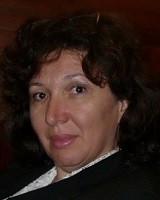
  • Prof. CARMEN MAFTEI

    Civil Engineering Faculty, Transilvania University of Brașov, Romania

    Plenary Lecture:

    From Hard Copy to Remote Sensing: The Importance of Maps in Environmental Applications

CARMEN MAFTEI is professor at the Building Services Department of Transilvania University of Brasov, Romania. She attended Polytechnic Institute of Iasi where she majored in Land Reclamation in 1988 and from 1996-1998 she attended a specialization in Water resources and protection of water resources, equivalent of Master of Science at Technical University of Construction Bucharest. In 2002 she finished the PhD studies in Water Science in Continental Environment in joint supervision at Montpellier University and “Ovidius” University. She’s research activity is focused on: (i) Hydrology and hydraulic modelling; (ii) Geographic Information Systems applications in environmental sciences; (iii) Remote Sensing applications in environmental sciences. As a result of research, she holds 20 books and books chapters, over 100 scientific papers published in different journals or conference proceedings, 1 patent, 3 international projects, 18 national grants, 10 research contracts with economic partners. She is member in many editorial boards of scientific journals. Prof. Carmen Maftei has chaired International Conferences, has been a member of the Scientific Committee of numerous others, presented keynotes and invited lectures and is a reviewer in numerous scientific journals. Her 30 years teaching experience includes Hydrology, Hydraulics, Geographic Information Systems & Applications at “Ovidius” University of Constanta and Transilvania University of Brasov.

Abstract: Maps have always been integral to environmental management and decision-making. Traditionally, environmental studies relied on hard copy maps, field surveys, and manual data collection to understand ecological conditions and address challenges such as land degradation, pollution, floods, etc. However, the integration of remote sensing technologies has ushered in a new era of environmental monitoring. Satellite imagery, LiDAR, drones, and other remote sensing tools now provide real-time, high-resolution data that is transforming how environmental data is gathered, analyzed, and applied. These advanced mapping techniques offer unprecedented accuracy and the ability to monitor large-scale environmental changes, making them indispensable for tasks such as land restoration, biodiversity conservation, and climate change monitoring. This paper examines the shift from traditional to remote sensing-based mapping, exploring how these innovations improve our ability to assess and respond to environmental issues. Through case studies and practical examples, it highlights the transformative potential of remote sensing in enhancing environmental decision-making, improving sustainability, and supporting the restoration of degraded landscapes.